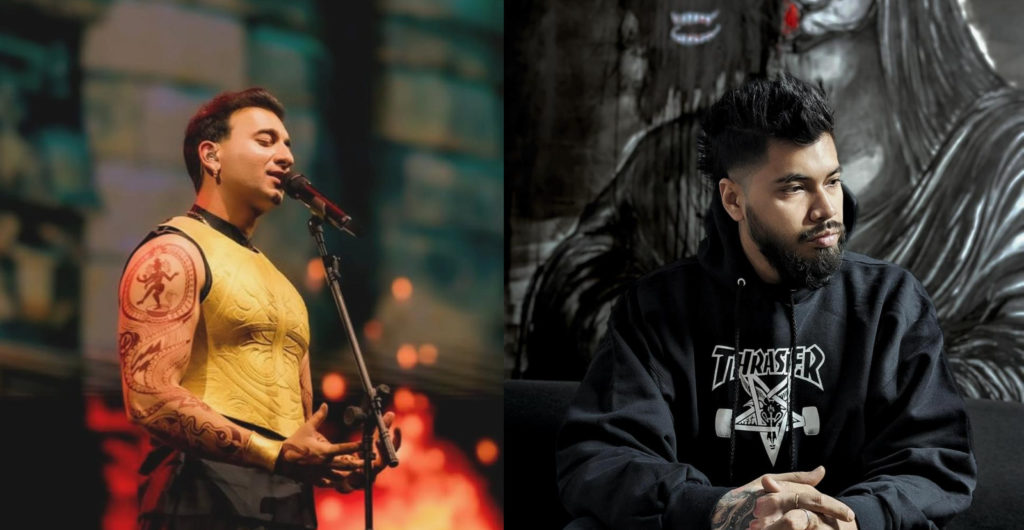
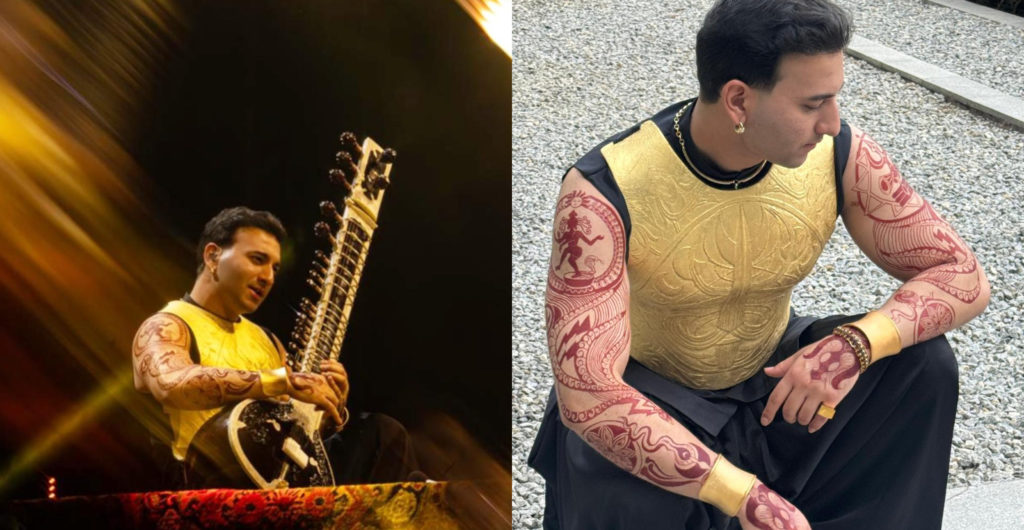
Some collaborations do not just come together, they evolve. When Santanu Hazarika first worked with sitarist Rishab Rikhiram Sharma on a mehendi based design, it caught attention for how unexpected it felt. Now, the artist has returned with a more expansive full arm piece, taking that idea further and turning it into something that feels almost like a visual extension of music itself.
How Santanu Hazarika Enriches Mehendi into Visual Narrative
The previous design of the half-arm had managed to gain some appreciation because of how perfectly it combined the traditions of mehendi with the visual language used by Santanu Hazarika. The current piece further enhances that idea by adding greater depth and complexity.
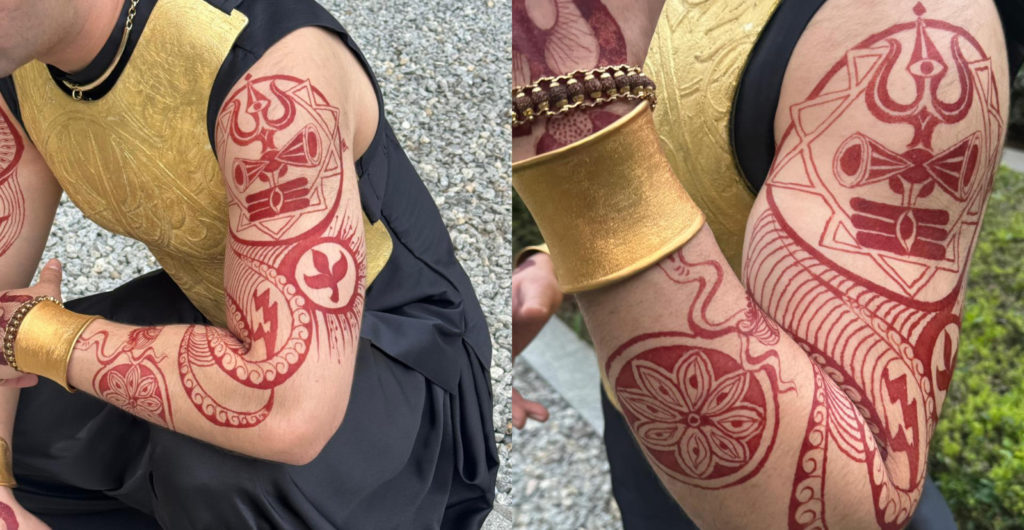
In the heart of this design is the iconic Nataraj figure. It represents a balance between creation and destruction – the same way music is an art of life and death. This is where all the design emanates from, and it features mythological imagery along with musical symbols such as the rakta kamal of worship, the conch shell, and designs inspired by wind movements.
Also included in the design is the symbolism associated with Lord Shiva such as naag, crescent moon, and trident. All these elements are strategically arranged and are not still at all but have their own motion and dynamics to them.
Intersection of Music and Art in the Works of Rishab Rikhiram Sharma
For a musician such as Rishab Rikhiram Sharma, who is known for giving spiritually intense performances, the integration of his music and art seems rather apt. The mehendi does not only serve as ornamentation; it is a part of the performance, resonating with the spiritual energy in the music.
As Santanu Hazarika put it, the design resembles a visual raga that builds up, spirals and settles in accordance with the emotion in the performance. This is reflected quite clearly in the overall structure of the design, which has an inherent rhythm in it as if responding to some sound. The work was carried out by artist Sona Mistry.
What makes this collaboration stand out is how naturally it bridges tradition and contemporary expression. Mehendi, often seen within specific cultural contexts, is reimagined here as something fluid