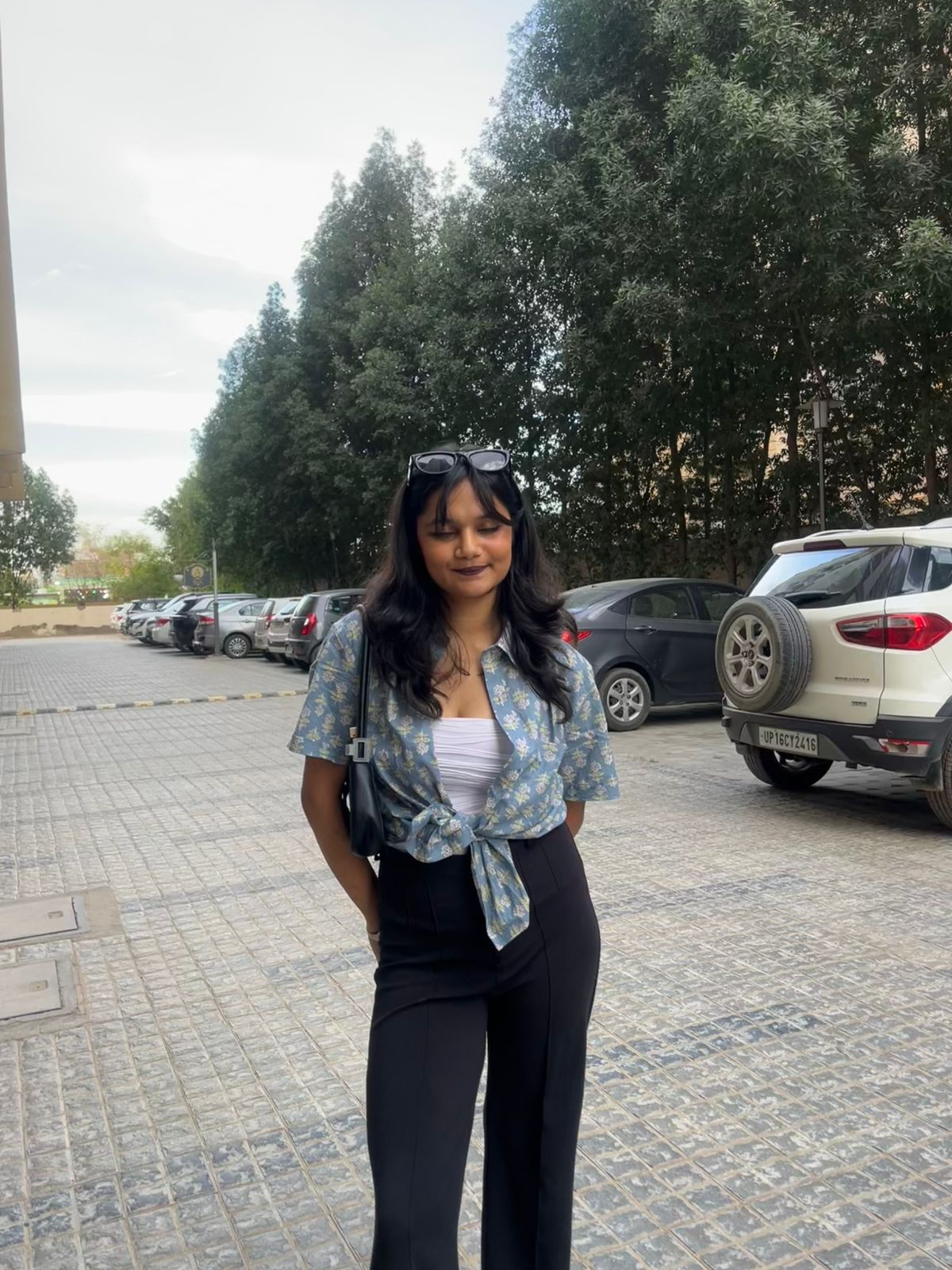
For most of us, Diwali is noise and nostalgia laughter spilling into rooms, diyas flickering by the window, and a faint chaos that somehow feels like calm. But for Priya Malik, the poet who has turned words into mirrors, the festival is something softer – a homecoming.

“Honestly, Diwali has always felt like a homecoming for me,” she says. “Not just to a physical house, but to a part of myself I forget in the rush of life. It’s the smell of ghee diyas, the sound of rummaging in the kitchen, and that hum in the air that says, you’re home. That’s what Diwali is – warmth, familiarity, and light that doesn’t just fill the room, it fills me.”

A Memory That Still Feels Like a Poem
When asked about a Diwali memory that lingers, Priya paints a quiet, intimate picture.
“My mum, standing in our room, lighting diyas one by one before the Lakshmi puja. Her hands shiny with oil, the flames flickering, and me just watching. Nothing dramatic, just her and that soft glow. That memory lives in me like a line of poetry I keep rereading.”
It’s these small, fleeting visuals that define her version of Diwali – not the curated perfection of social media, but the real, lived beauty of home and belonging.
Love, Loss, and the Light in Between
Her writing often moves through the full spectrum of emotion – love, loss, memory, and everything in between. So, how does Diwali affect the storyteller in her?
“Diwali has this way of turning the volume up on everything,” she smiles. “The love feels warmer, the absences louder, the memories sharper. It’s a festival of beginnings, but beginnings come with endings too. Now, I find myself celebrating it through my son’s eyes. This is his second Diwali, and somehow, everything feels new again.”
There’s something achingly human in that, how the same light can illuminate both joy and longing.

The Quiet After the Chaos
For someone who writes poetry, silence often holds as much power as sound.
“There’s this tiny window of time,” she says, “after the laughter fades and the last diya burns out, when the world just pauses. That’s my favourite part. It reminds me of the darkness before the light – and the one that sometimes follows even after.”
If she had to describe this year’s Diwali in one line, she smiles and says,
“This year, the light didn’t just enter the room… it found its way into me.”
#AdsCanWait: The Beauty in the Messy Moments
When told about Social Nation’s #AdsCanWait campaign – celebrating real, imperfect festive moments – Priya lights up. “I love this,” she says. “My best Diwali memories are never the curated ones. It’s the rangoli that gets smudged, the diya that keeps going off but somehow stays lit, the random bursts of laughter. That’s the real festival the messy, imperfect, human parts that make it ours.”
And in a world of filters, how does she hold onto honesty?
I think honesty is the only real filter that matters,” she smiles. “I’m always searching for the 1999 in my 2025. I may not always get it right, but I try to show up as who I am. There’s a different kind of light in truth, quieter, but lasting.”
A Poem Called Ghar
Before signing off, she mentions a ritual, one that grounds her every year.
“After everything’s done, I light one diya just for myself. No phones, no audience, no chaos. Just me, a quiet corner, and gratitude. Sabr, shukr and tawakkul, as my Instagram bio says.”

If she could dedicate a poem to Diwali, it would be “Ghar”. “Because that’s exactly what Diwali feels like to me,” she says softly.
And when all the lights go out, what does she hope people remember?
“The feeling. Not the photos, not the noise – the feeling. The warmth, the love, and the tiny moments, especially the ones that remind us of our not-so-perfect bachpan wali Diwali.”
Because as Priya Malik reminds us –
the most beautiful kind of light
is the one that feels like home.